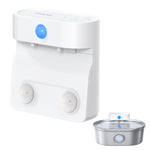
A stainless steel cat water fountain can be a practical choice when you want a drinking station that is durable, easy to inspect, and straightforward to clean. But the material alone does not make a fountain hygienic, spill-proof, or right for every cat. The better buying decision comes from looking at the complete design: bowl stability, capacity, pump placement, filtration, noise, access to replacement parts, and how easily every wet surface can be cleaned.
This guide explains what stainless steel does well, where marketing claims can be misleading, and how to choose and maintain a fountain for one cat or a multi-cat home.
Is a stainless steel fountain a good choice for cats?
For many households, yes. Stainless steel is durable, resists everyday scratches better than many softer materials, and does not absorb odors in the way a badly worn or deeply scratched surface can. A smooth stainless bowl also makes residue easier to see during cleaning.
However, “stainless” does not mean self-cleaning or bacteria-free. Saliva, hair, food particles, dust, mineral deposits, and biofilm can still collect in the bowl, pump, filter housing, tubing, seams, and other wet parts. Hygiene depends on frequent water changes, complete disassembly, proper washing, and timely replacement of filters or worn components.
Also remember that a fountain is one hydration option, not a medical device. Cornell University notes that some cats may drink more from a fountain, while individual preferences vary. Fresh water in accessible locations, multiple drinking stations in multi-pet homes, and moisture-rich food can also support water intake. A sudden increase or decrease in drinking should be discussed with a veterinarian.
What does “304 stainless steel” mean for a pet fountain?
304 stainless steel is widely used for household and food-contact applications because it offers useful corrosion resistance and durability. In a cat fountain, it can make the visible drinking tray easier to wipe, rinse, and inspect than an opaque or heavily textured surface.
That does not mean every component is stainless steel. Most fountains also contain a pump, filter media, gaskets, plastic housings, or electronic parts. Check which parts actually touch the water, which are removable, and whether the manufacturer provides cleaning instructions for each component.
Avoid relying on claims such as “stainless steel prevents all bacterial growth.” No fountain material removes the need for cleaning. The design must allow you to reach corners, the pump intake, impeller chamber, filter tray, and water channels.

Seven features to compare before buying
1. Stability and resistance to tipping
A heavier fountain may be harder for a large or playful cat to move, but total weight is only part of the equation. A wide base, low center of gravity, non-slip feet, level flooring, and a sensible fill level all affect stability. Place the fountain away from ledges and busy walkways, and use a washable mat if your cat paws at water.
2. Capacity and refill visibility
Choose capacity based on the number of pets, room temperature, and how often you can check the fountain. A larger reservoir can reduce refill frequency, but it does not justify leaving the same water in place for long periods. A visible water-level window can make daily checks easier and help prevent the pump from running with too little water.
3. Easy disassembly and cleaning access
The best fountain is one you will actually clean. Look for removable bowls and trays, accessible water channels, a pump that can be opened according to the manual, and few narrow crevices. “Dishwasher-safe” may apply only to selected non-electrical pieces, so follow the product instructions rather than putting the complete unit in a dishwasher.
4. Pump design and electrical layout
Some fountains use an internal pump connected by a cord; others use an external or separated pump design. Compare how the powered components are isolated, how the pump is cleaned, and whether replacement pumps are sold. Cordless placement can reduce cord clutter, but a battery-powered model still needs charging and routine inspection.
5. Noise in real use
Pump specifications are useful, but water level and cleanliness affect sound. A fountain may become louder when the reservoir is low, the pump intake is obstructed, or mineral buildup develops. If your cat is cautious around new sounds, introduce the fountain while keeping a familiar water bowl available nearby.
6. Filtration and replacement availability
A filter can capture some hair and debris and may use additional media for taste or odor, depending on its design. It does not sterilize the water, replace washing, or correct every local water-quality issue. Check the filter type, replacement schedule, ongoing cost, and whether compatible filters are readily available.
7. Drinking surface and multi-cat access
Look at the height, bowl depth, edge shape, and room around the fountain. In a multi-cat household, one large fountain is not always enough. Cats may block one another from a shared station, so place multiple water sources in separate, easy-to-access locations rather than clustering them together.
Stainless steel fountain versus a water bowl
A clean bowl remains a valid choice. It has no pump or filter to maintain, is inexpensive, and makes water replacement simple. A fountain adds circulation and may appeal to some cats, but it also adds parts that require care.
Choose a fountain when its features solve a real household need—such as cordless placement, easier water-level monitoring, a preferred drinking flow, or a stable reservoir. Keep at least one alternative water source during the transition so your cat is never forced to use unfamiliar equipment.
A practical cleaning and maintenance routine
Use the manufacturer’s instructions as the primary guide because components differ. As a general routine:
- Every day: Check the water level, remove visible hair or debris, refresh the water, and confirm that the pump is flowing normally.
- On a regular schedule: Unplug or power off the fountain, empty it, disassemble all washable parts, and clean them with appropriate soap and water. The FDA advises washing water bowls daily; a fountain’s recirculating system also needs attention beyond the visible tray.
- Clean the pump: Follow the manual to access the cover, intake, and impeller area. Rinse away hair, slime, and mineral residue without wetting components that the instructions say must remain dry.
- Replace filters as directed: A darkened, clogged, damaged, or overdue filter should not remain in service. Rinse a new filter first if the manufacturer instructs you to do so.
- Inspect wear points: Check seals, cables, charging contacts, the pump, and stainless surfaces. Stop using damaged electrical parts and use the correct replacement component.
If your home has hard water, mineral scale may appear sooner. Use only cleaning or descaling methods approved for the product, rinse thoroughly, and never mix cleaning chemicals.

How to introduce a new fountain
- Place it near an existing drinking location, but not directly beside the litter box or a busy feeding area.
- Leave the familiar bowl available while the cat investigates.
- Start with the fountain filled and clean. If the sound causes hesitation, allow the cat to inspect it while it is off before turning it on.
- Do not push the cat toward the water or remove all alternatives.
- Watch actual drinking behavior over several days. Preference matters more than the assumption that every cat likes moving water.
How the UAHPET Stainless Steel Fountain Pro fits these criteria
The UAHPET Upgrade Visible Stainless Steel Cat Water Fountain Pro uses a 304 stainless steel drinking structure, a visible water-level design, wireless placement, and an external pump layout. Its product page lists operating noise below 30 dB and battery life of up to 130 days; actual runtime will vary with operating mode, use, and charging conditions.
It is available with different filter quantities, and UAHPET also sells compatible replacement filters and pump options. Those details matter because long-term fountain performance depends as much on maintenance and replacement-part availability as on the original bowl material.
Frequently asked questions
Are stainless steel cat fountains more hygienic than plastic fountains?
A smooth stainless surface can be durable and easy to inspect, but hygiene depends on the entire fountain design and your cleaning routine. Pumps, filters, seams, and other materials still need regular care.
Will a fountain make my cat drink more?
It may help some cats, but not all cats prefer moving water. Keep fresh water easy to access and offer more than one option, especially in a multi-cat household.
How often should I change the water?
Check it every day and refresh it regularly rather than only topping it off. Clean the fountain on the schedule in its manual, and sooner if you see hair, residue, slime, odor, or reduced flow.
Can a filter replace cleaning?
No. A filter can capture certain debris or condition the water according to its design, but it cannot clean the reservoir, pump, or drinking surface.
What if my cat suddenly drinks much more or less?
Changes in thirst can have many causes. A fountain is not a diagnostic or treatment tool, so contact a veterinarian if you notice a persistent or concerning change.
Bottom line
Choose a stainless steel cat water fountain for its practical advantages—durability, cleanability, visibility, stability, and available replacement parts—not because of exaggerated health promises. Match the design to your cat and household, maintain it consistently, and keep an alternative source of fresh water available. For a broader comparison of fountain types, see our complete cat water fountain buying guide.